Warfare in the Ancient World
Posted on Fri 30 September 2005 in history
Warfare in the Ancient World — Volume 1
Brian Todd Carey, Author
Joshua B. Allfree, Tactical Map Illustrator
John Cairns, Regional Map Illustrator
30 September 2005, Pen and Sword Books, Ltd.
This book follows two thousand years of war. It begins with the first armies of Mesopotamia and Egypt and ends with the fall of the Western Roman Empire. Carey traces how each army learned to combine heavy and light infantry with heavy and light cavalry.
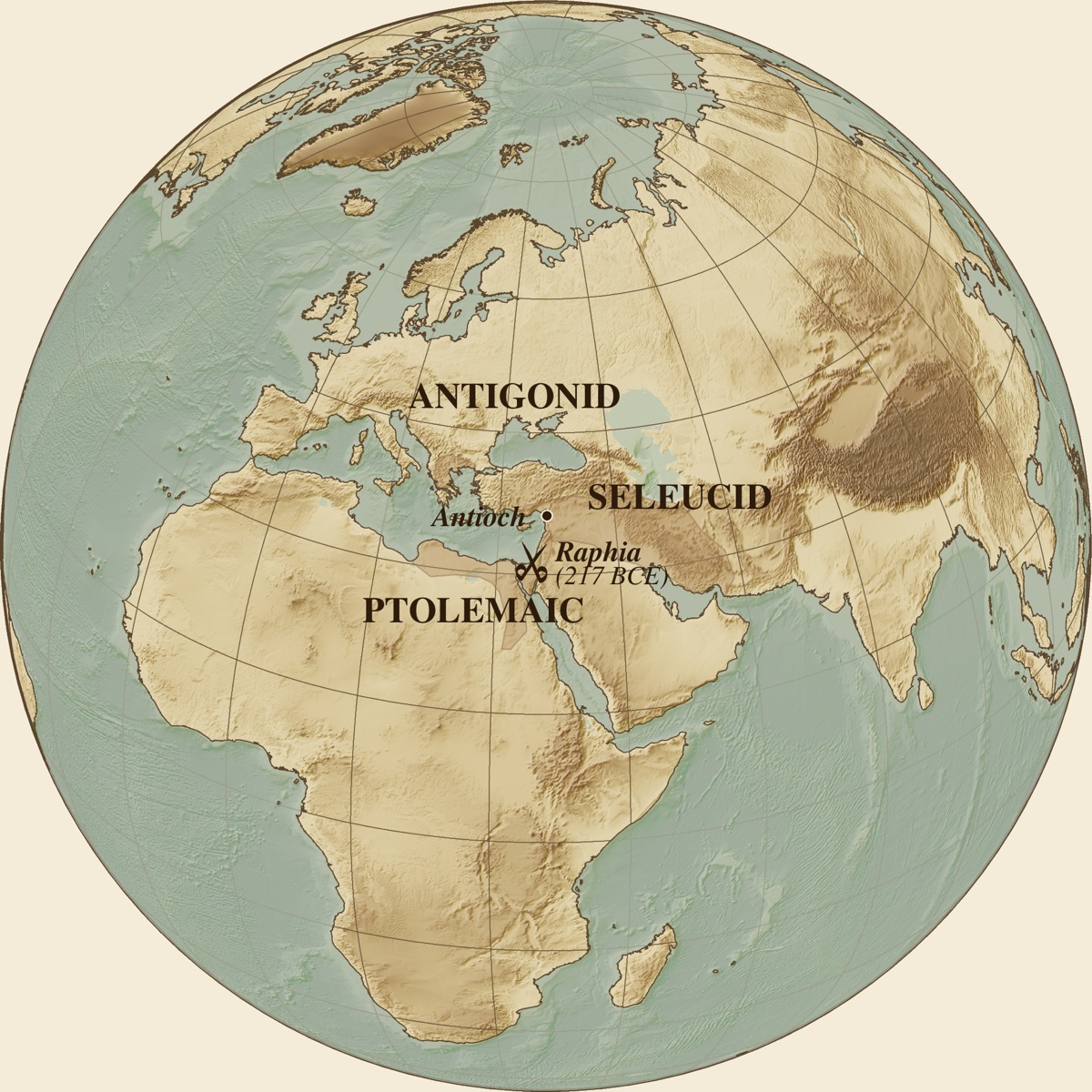
Raphia, 217 BCE
Antiochus III came to the Seleucid throne in 233 BCE. He "inherited little more than the capital of Antioch" (Warfare in the Ancient World, p. 154). Parthia had taken the east, and decades of war with Ptolemaic Egypt had worn down the west. To win back his inheritance, he marched south from Syria and met Ptolemy IV at Raphia, on the frontier of Palestine and Egypt.
Antiochus brought over 62,000 infantry, 6,000 cavalry and 102 Indian war elephants raised in Bactria. Ptolemy answered with over 45,000 infantry, 4,000 cavalry and some 73 African elephants. Both kings put their phalanx in the center and their elephants in front of the wings.
Antiochus's elephants drove back the smaller African elephants on his right, and his cavalry chased Ptolemy's guard from the field.
Raphia shows what elephants can and cannot do.
Warfare in the Ancient World is available as an ebook from Pen & Sword.